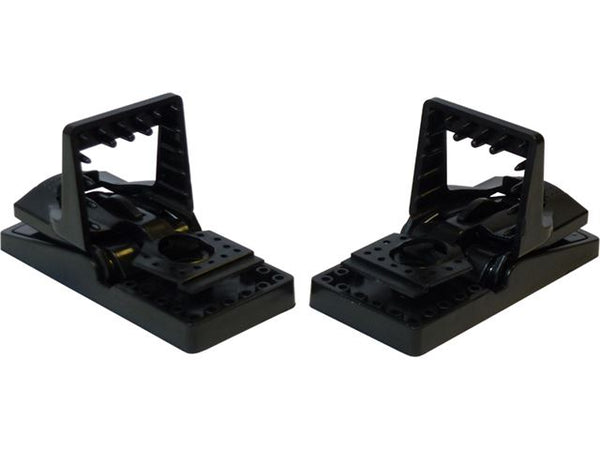
The presence of mice in a building is usually regarded as undesirable for a variety of reasons. Firstly the cause huge losses of food products either by directly eating it or contaminating it. Mice also cause physical property damage by chewing or gnawing through materials such as electrical wiring, plumbing, food containers and pacakaging, furniture and machinery. Mice also have the potetial to transmit diseases and bacteria to humans such as salmonella.
Trapping mice is a very common and effective control method. Trapping can be used as an alternative or in combination with mouse bait / poison especially in areas where the use of poisons is not acceptable. We have a wide range of mouse traps including wooden snap traps, plastic snap traps, multi catch traps and single live catch traps.
The safe and friendly way to deal with unwanted house guests. This British-designed product has been especially developed to cause the least stress and no harm to mice when they...
Multi-catch traps are often used by professional pest control operatives in areas where they cannot use poisons or conventional traps. Simple to use There are two entry points for an...
Little Nipper Mouse Trap, with its unique wooden platform this mousetrap is one of the most effective traps available. The Little Nipper was first made in 1897, and its distinctive...
The mouse has to tread on a platform to reach the bait-well, which triggers the trap, meaning that the mouse cannot take the bait without triggering the trap. Simple to...
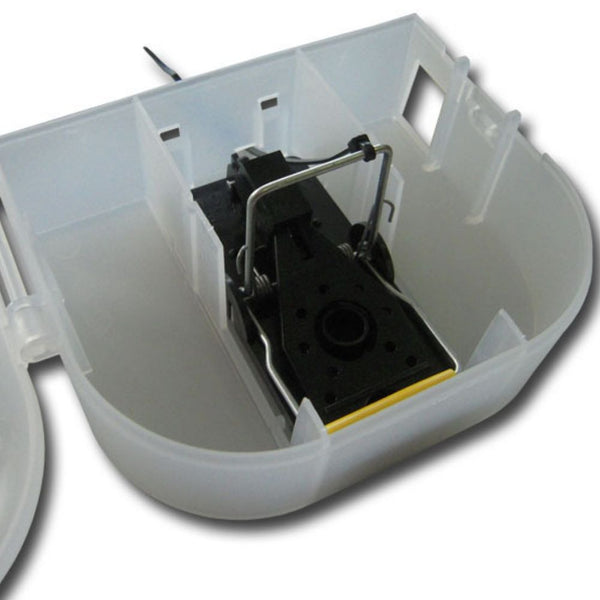
The plastic Easy-Set Mouse Trap box is durable and easy to check thanks to the clear design This safe and secure device comes ready for instant use, with a pre-installed...
The company Easy Pest were very easy to communicate with via email to get the correct size of netting along with a repair kit, staples and a stapler gun. Once we made the decision to purchase the items, they sent a quote/invoice which we agreed on and payment followed. Items then arrived within the week. Just now waiting on some clear weather to put it up over our fruit trees.